
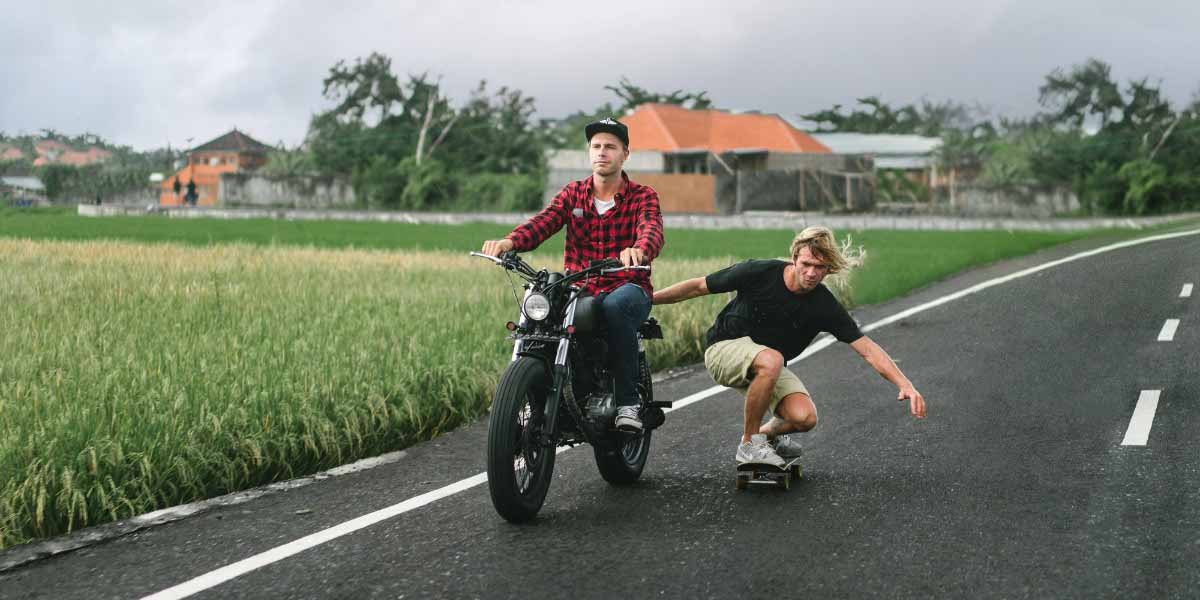
You know that moment when you’re pushing hard, everything clicks, and you’re suddenly flying past people on the sidewalk? That’s about 12 mph. Most skateboarders never actually know how fast they’re going, but understanding how fast a skateboard can go changes how you think about your setup, your route, and what’s actually holding you back.
The average skateboard speed for casual riding is 5 to 12 mph. Experienced riders commute at 8–12 mph, skilled downhill skaters push 30–50 mph and the all-time world record (set by Peter Connolly in 2017) is 91.17 mph. What you’re actually capable of depends on your wheels, your bearings, the surface, and how well you can push.
Here’s exactly what the numbers look like across every type of riding.
Quick Answer: Skateboard Speed Ranges
- Casual cruising/commuting: 5–12 mph (most riders)
- Experienced riders on flat ground: 7–12 mph
- Downhill/speed runs: 30–65 mph
- World record (Peter Connolly, 2017): 91.17 mph
- Electric skateboard: 15–30 mph (consumer models)
- The biggest factors: wheel size and hardness, bearing quality, surface type, and pushing technique
What Is the Average Speed of a Skateboard?
The average speed of a skateboard is 5–12 mph, covering all skill levels, setups, and terrain. Most riders on a casual commute average 7–9 mph. Push harder, ride smoother surfaces, and use bigger wheels, and 12 mph is very achievable without breaking a sweat. A UC Davis study that tracked real-world skateboarders on campus found an average speed of 9.7 mph — a solid real-world benchmark.
Here’s how that plays out in practice:
| Scenario | Average Speed |
| Beginner cruising | 5–7 mph (8–11 km/h) |
| Intermediate skater with soft wheels | 7.5 mph (12 km/h) |
| Commute to school (2 miles) | 8–12 mph (12–19 km/h) |
| 7-mile cruise to the beach | ~7 mph (11 km/h) |
| Extended flat ride (10+ miles) | 5–8 mph (8–12 km/h) |
| Hard pushing with quality bearings | 7.5–12 mph (12–19 km/h) |
| UC Davis observed the average (real riders) | 9.7 mph (15.6 km/h) |
| Advanced downhill riding | 50–90 mph (80–144 km/h) |
How Fast Can a Skateboard Go on Flat Ground?
On flat ground, most recreational skateboarders travel at 5–12 mph, depending on their skill and setup. Experienced riders who push efficiently can maintain 8–10 mph over distance. On a perfectly smooth surface with good bearings and large wheels, a skilled skater can sustain 12–15 mph flat but that takes real pushing endurance and solid technique.
The terrain matters more than people expect. Asphalt is generally faster than concrete — concrete joints and expansion gaps slow you down subtly. Cracked sidewalks can cut your average speed by 2–3 mph just from the constant micro-corrections you’re making. On a pristine bike path or freshly paved road? You’ll feel the difference the second you step on.
How Fast Can a Skateboard Go Downhill?
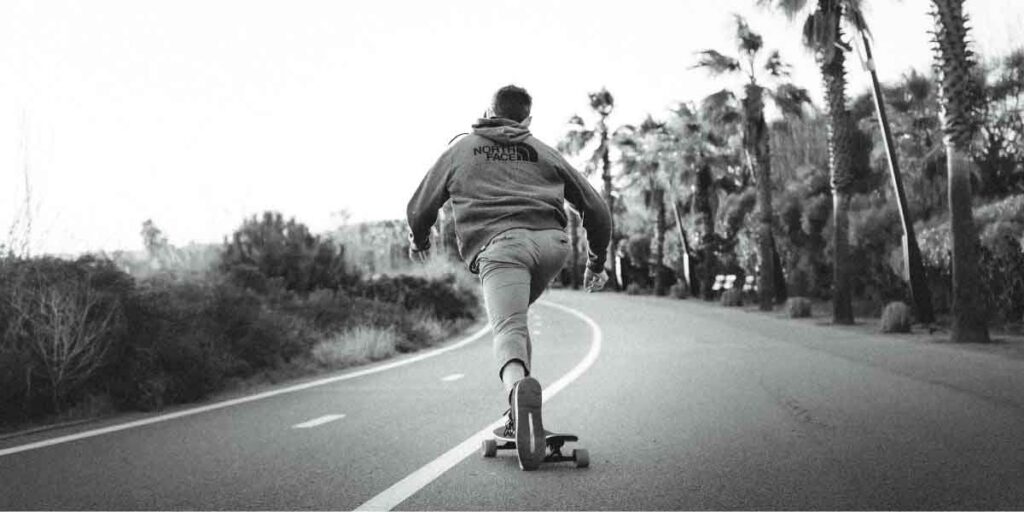
On steep hills, a skateboard can go extremely fast and “extremely fast” is not a figure of speech. The current Guinness World Record for fastest speed on a skateboard (standing position) is 91.17 mph (146.73 km/h), set by Peter Connolly from the UK at L’Ultime Descente in Quebec, Canada on September 16, 2017. Connolly edged out Kyle Wester, who had previously set a record of 89.41 mph.
91 mph is faster than most highway speed limits.
Outside of record-setting events, serious downhill skaters regularly hit 50–65 mph on steep runs. These riders use speed tucks (crouching low with arms in to reduce wind resistance), ride specialized downhill boards with wide trucks and large, grippy wheels, and practise controlled speed checks through slides to manage their pace. It is not something you stumble into — it’s a discipline with real training behind it.
For a casual rider hitting a moderately steep hill, expect 20–35 mph without doing anything special. That’s already fast enough to cause serious injury without a helmet, wrist guards, and slide gloves.
How Fast Can a Longboard Go?
Longboards are faster than standard skateboards in most real-world conditions. Their larger wheels (65mm+) roll over rough pavement more easily, and their longer wheelbase gives them stability at speed. On flat ground, most longboard riders cruise at 8–14 mph. Hard pushing on a distance-oriented setup can push that to 15 mph+.
For downhill, longboards can reach 50–65 mph regularly, higher with the right hill and the right rider. The geometry of a dropped-deck longboard (where your feet are lower to the ground) makes it more stable at speed than a traditional popsicle deck, which is why downhill racers use purpose-built longboards rather than street decks.
How Fast Can an Electric Skateboard Go?
Electric skateboards remove the pushing variable entirely — the motor handles acceleration. Consumer electric skateboards typically reach 18–28 mph (29–45 km/h) as a comfortable operating range. Some high-performance models hit 30–38 mph. Purpose-built speed boards exist that exceed 40 mph, though these are specialist products, not everyday commuters.
Motor power, battery voltage, wheel size, and rider weight are the main variables. A heavier rider on a lower-wattage board will see noticeably lower top speeds than the spec sheet suggests. Always check local regulations — electric skateboards are classified as motor vehicles in some areas and have legal speed limits.
What Factors Affect Skateboard Speed?
Speed isn’t one thing; it’s a stack of variables that either compound each other or cancel each other out. Here’s how the main ones actually work.
Wheel Size and Hardness
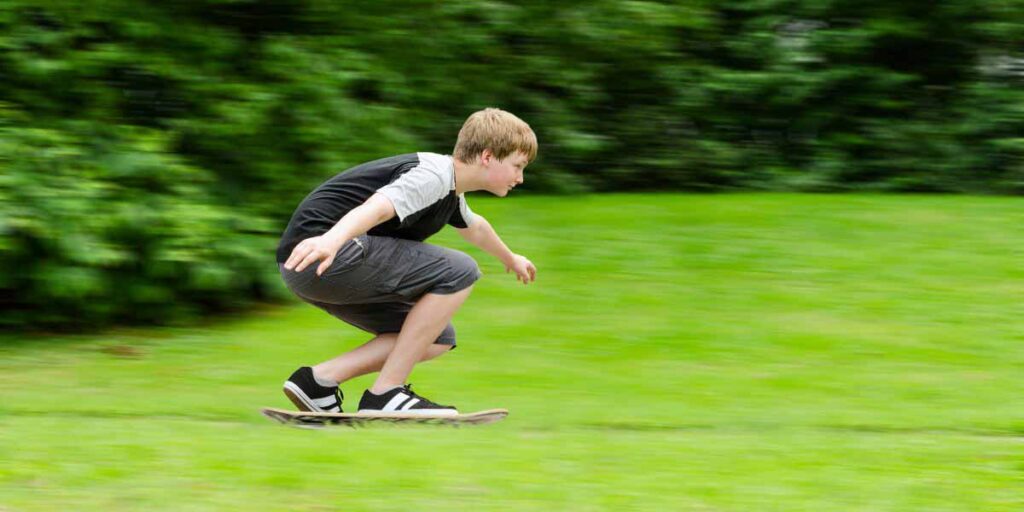
Wheel choice is probably the single biggest setup variable for speed. Larger wheels (54mm+) roll faster because they cover more ground per rotation. Harder wheels (99A+) roll faster on smooth surfaces because they deform less, reducing rolling resistance. Softer wheels (78A–87A) are slower in pure roll speed but absorb bumps, letting you maintain momentum over imperfect pavement.
For street skating and trick work: 50–54mm, 99A–101A. Brands like Spitfire Formula Four and OJ Super Juice are reliable benchmarks. For cruising and commuting where you want speed without rattling your teeth: 56–60mm, 78A–87A. OJ Hot Juice and Bones ATF are solid choices here.
The durometer scale goes from 1A (nearly rubber) to 101A (very hard). Most park skaters ride 95A–101A. Speed-focused cruisers run 78A–87A. There isn’t a “best” — it depends on your surface.
Bearings
Bearings control how freely your wheels spin. Better bearings mean less friction, which means more of your push actually goes into forward momentum instead of heat. For most skaters, a fresh set of Bones Reds (~$20) is the best bang for buck upgrade available — they’re fast, durable, and easy to maintain. If you want to go up a level, Bones Swiss or Zealous built-in bearings are genuinely noticeable upgrades.
The ABEC rating (1 through 9) measures machining tolerance. Higher isn’t always meaningfully better for skating since skateboard bearings take lateral impacts that ABEC standards don’t measure. A clean, well-lubricated set of ABEC-5 Bones Reds will outperform a dirty set of ABEC-9 generics every time. Keep them clean and re-lube every few months.
Terrain
The surface you ride on has a massive impact on your speed. Smooth asphalt and freshly poured concrete are the fastest surfaces. Rough or cracked pavement creates friction and forces micro-corrections that bleed speed. Downhill slopes amplify everything — gravity does the work, but you need skill and the right setup to control what you’ve built up.
Urban commutes with traffic stops, curbs, and pedestrians will drop your average speed to 7–8 mph, regardless of how good you are. That’s not a flaw — it’s realistic.
Rider Skill and Pushing Technique
Skill affects speed in two ways: how efficiently you push, and how well you hold speed once you have it. A beginner wastes energy on every push — uneven weight distribution, short strokes, and dragging their foot on the ground. An experienced rider uses long, powerful strokes, keeps their weight centred, and knows how to pump through carves to maintain momentum without pushing.
A skater who can ollie over curbs and dodge cracks without slowing down will average 1–2 mph faster than someone who has to step off and walk around every obstacle. That adds up significantly over a real-world commute.
Rider Weight
Heavier riders push off with more initial force, which helps with acceleration. But rolling resistance increases with weight, so heavier riders typically have a lower top cruising speed on flat ground. On downhill runs, extra weight can actually help — more mass means more gravitational pull. The difference between a 140 lb and a 200 lb rider is noticeable but rarely dramatic. Setup and skill matter more.
Weather Conditions
Dry conditions are fastest. Wet surfaces increase rolling resistance significantly — water gets into the bearing races and the grip between wheel and pavement changes. A tailwind is a genuine speed boost (enjoy it). A headwind is punishing — even a 10 mph headwind can cut your effective speed by 30%. Cold weather makes bearings slightly stiffer until they warm up. Hot weather can soften asphalt and increase rolling resistance marginally.
Is Skateboarding Faster Than Walking or Running?
Walking averages 3–4 mph. Skateboarding averages 9.7 mph (per the UC Davis study). That makes skating roughly two to three times faster than walking for real-world commutes. You can extend your comfortable travel range significantly — a 20-minute walk becomes a 7–8 minute skate.
Versus running, it’s more nuanced. A casual jog is about 5–6 mph — slower than a decent skater. But elite sprinters hit 20–25 mph, which is faster than most street skating. Over distance though, skating wins: sustained running at 10 mph is hard; sustained skating at 10 mph on a good surface is quite achievable for an intermediate rider.
How to Go Faster on Your Skateboard
There are real, practical things you can do to increase your speed. Here’s what actually moves the needle:
1. Upgrade your wheels. Go bigger (54mm+) and match hardness to your surface. For smooth pavement, Spitfire Formula Four 99A or OJ Elite Hardline are excellent. For rougher ground, OJ Hot Juice 78A or Bones ATF will let you roll over imperfections that would otherwise kill your momentum.
2. Get proper bearings — and clean them. Bones Reds are the honest answer for most skaters. They’re fast, affordable, and widely available. If you want to go further, Bones Swiss are a genuine upgrade. Clean them every couple of months with acetone or bearing cleaner and re-lubricate with Bones Speed Cream. Dirty bearings are slow bearings.
3. Loosen your trucks slightly. Tight trucks make steering harder and waste energy. A slight loosening lets you lean into turns and maintain momentum through carves. Don’t go so loose that you’re wobbling at speed — find the balance.
4. Work on your push. This is the one most skaters overlook. Long, low, powerful strokes beat short rapid ones every time over distance. Keep your pushing foot low to the ground and drive through the full stroke before lifting. Practice this deliberately and you’ll feel the difference within a week.
5. Choose better routes. Smooth pavement, slight downhill grade, minimal stops. One good route change can add 2–3 mph to your average without changing any equipment.
FAQs
How fast does a skateboard go on flat ground?
On flat ground, most recreational skateboarders travel at 5–12 mph. Experienced riders with good technique and quality wheels can sustain 8–12 mph comfortably. A UC Davis study of real-world skateboarders found an average speed of 9.7 mph across all skill levels and setups. On perfect smooth pavement, a skilled skater pushing hard can briefly hit 15 mph flat.
How fast can a skateboard go downhill?
Downhill skateboard speeds vary enormously by hill grade and rider skill. Casual riders on a gentle slope hit 15–25 mph without trying. Experienced downhill skateboarders regularly push 50–65 mph. The world record, set by Peter Connolly in 2017 at a dedicated gravity sports event in Quebec, Canada, is 91.17 mph — the fastest anyone has ever gone on a skateboard.
What is the fastest speed ever recorded on a skateboard?
The Guinness World Record for fastest speed on a skateboard (standing position) is 91.17 mph (146.73 km/h), achieved by Peter Connolly (UK) on September 16, 2017, at L’Ultime Descente in Quebec, Canada. Before Connolly, Kyle Wester held the record at 89.41 mph. Both runs were at dedicated speed skating events on closed, purpose-built courses.
Is skateboarding faster than walking?
Yes, significantly. The average walking pace is 3–4 mph. Real-world skateboard speeds average around 9.7 mph (per UC Davis research) — roughly two to three times faster. For short to medium commutes of 1–5 miles, a skateboard meaningfully cuts travel time compared to walking.
Is skateboarding faster than running?
It depends. Casual jogging (5–7 mph) is slower than a decent skater. Sustained running at 10 mph is exhausting for most people; skating at 10 mph is manageable over distance. However, elite sprinters can hit 20+ mph over short distances, which exceeds normal skateboarding speeds. For distances over half a mile, a skateboard will outpace most runners.
How fast can a longboard go?
On flat ground, most longboarders cruise at 8–14 mph, with hard pushers reaching 15+ mph. Downhill, longboards regularly hit 50–65 mph with experienced riders. The stability of a longboard’s geometry (longer wheelbase, lower deck) makes high-speed riding more manageable than on a traditional popsicle deck.
How fast can an electric skateboard go?
Consumer electric skateboards typically reach 18–28 mph. High-performance models can hit 30–38 mph. Specialist speed boards exist beyond that, though these are purpose-built for performance, not commuting. Motor power, rider weight, wheel size, and battery charge level all affect actual top speed.
How can I make my skateboard go faster?
The highest-impact upgrades are: (1) larger, surface-appropriate wheels — Spitfire Formula Four or OJ Hot Juice depending on your terrain; (2) fresh quality bearings — Bones Reds are the value standard, Bones Swiss for a noticeable step up; (3) better pushing technique — long, low, powerful strokes rather than short choppy ones; (4) route selection — smooth pavement with a slight downhill grade makes a real difference.
The Bottom Line
So, how fast can a skateboard go? For most people on most days: 7–12 mph, cruising around town or commuting somewhere. Push your setup and your technique and you’re looking at 12–15 mph on good pavement. Go downhill with the right board and real skill and speeds above 50 mph are achievable. And if you’re Peter Connolly at L’Ultime Descente with a custom speed setup? 91 mph.
The practical takeaway: if you feel slow, check your wheels and bearings first. A set of fresh Bones Reds and properly sized wheels for your surface type is the fastest and cheapest upgrade you’ll make. Then work on your push. Technique is free.
Get rolling, stay safe, and wear your helmet when it matters.