
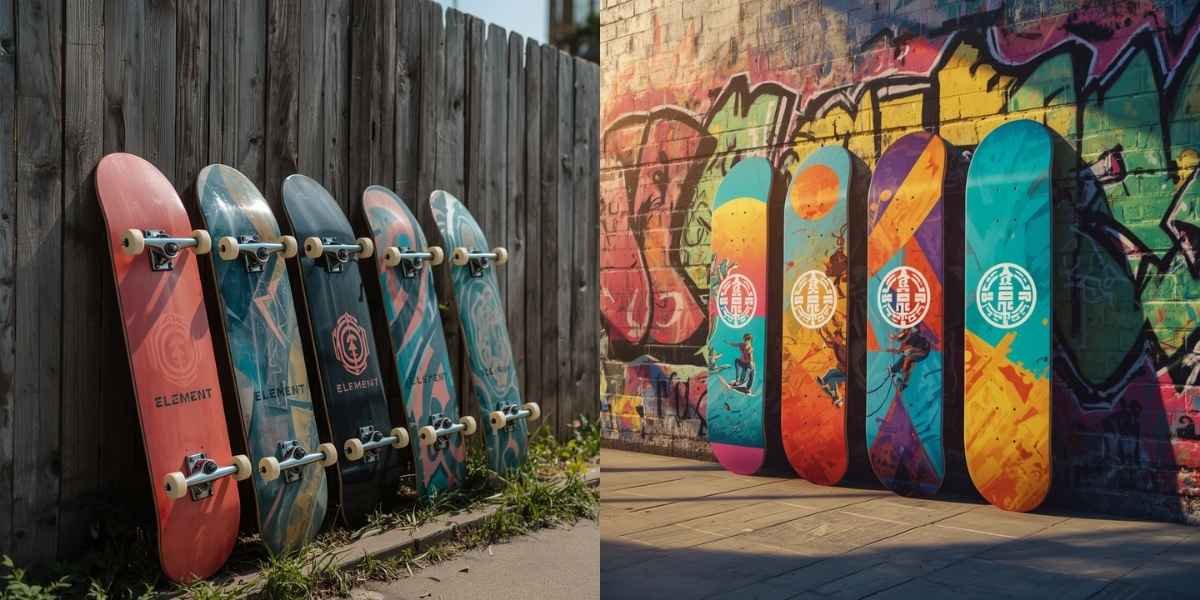
You’ve probably seen Element boards everywhere — skate shops, YouTube, maybe even your mate’s garage. The tree logo is one of the most recognisable symbols in skateboarding. But recognisable doesn’t always mean good, and if you’re about to spend your money, you deserve a straight answer.
So, are Element skateboards good? Yes, genuinely, but with one important distinction that most reviews miss completely. The deck quality is legitimately impressive and rivals that of brands like Baker and Real. The stock components on a complete are a different story. Understanding that gap is the whole game here, and by the end of this article, you’ll know exactly what to buy and what to skip.
- Element decks are high quality, made by the respected manufacturer PS Stix, and comparable to top-tier brands like Baker, Real, and Enjoi.
- Element complete skateboards are solid for beginners but the stock trucks, wheels, and bearings are mediocre and worth upgrading as you progress.
- Element is best for beginners buying a first complete, returning skaters, or intermediate riders who want a quality deck without paying premium prices.
- If you’re an experienced skater buying just the deck, Element is a completely legitimate choice.
- The brand has real skate culture credibility: 30 years of history, Bam Margera, Nyjah Huston, Tom Schaar, and a current team that can actually skate.
Is Element a Good Skateboard Brand?
Element is a genuinely good skateboard brand with over 30 years of history, a respected manufacturing partner, and a pro team that has included some of the best street skaters on the planet. Founded by Johnny Schillereff in 1992, Element started as a small collaborative company called Underworld Element in Atlanta before relaunching as a skateboarding only brand and becoming one of the most widely distributed skateboarding brands in the world.
That kind of longevity doesn’t happen by accident. You don’t stay relevant in skateboarding for three decades by making bad products.
Here’s the thing that most reviews skip over, though. “Element skateboards” is not one product. It’s a brand that sells both standalone decks (which are excellent) and complete setups (which are good enough to learn on but come with components that will eventually frustrate you). Knowing which one you’re evaluating changes everything.
Who Makes Element Skateboards?
Element decks are manufactured by PS Stix, a highly respected skateboard wood shop run by skateboard industry veteran Paul Schmitt, with facilities in both the US and Mexico. This matters more than most people realise.
PS Stix doesn’t just make decks for Element. They press decks for Toy Machine, Plan B, and other brands that skaters with real opinions tend to respect. When multiple legitimate skate brands trust the same manufacturer, it’s a quality signal, not a coincidence.
The wood itself is 7-ply maple, the industry standard for street and park skateboarding. Element presses their decks using a few different technologies, depending on the construction type.
Thriftwood decks use undyed wood layers to reduce chemical usage and make recycling easier. It’s an eco-conscious approach, and the boards are solid and durable. If you’re skating hard and don’t need anything exotic, Thriftwood is perfectly fine.
Featherweight decks use thinner wood veneers pressed with stronger glue. The result is a lighter board with noticeably more pop. If you’re doing flip tricks, this is the construction you want.
Twig is Element’s lightest construction, built on the Featherweight approach but pushed even further for lighter and younger riders. If you’re buying for a kid or you’re a lighter adult, this is worth knowing about.
Are Element Skateboards Good for Beginners?
Element skateboards are one of the better choices available for beginners, particularly if you’re buying a complete setup. You get a quality deck with decent components at a price point that doesn’t sting if you decide skateboarding isn’t for you, or doesn’t sting too badly when you snap your first board doing something ambitious.
The complete setups typically come with Element’s own trucks, 52mm wheels at around 99A hardness, and basic ABEC 5 bearings. Those bearings are fine. The trucks are functional. The wheels roll.
But here’s the truth: nothing in that package is going to blow your mind once you start progressing. ABEC 5 bearings spin slower than Bones Reds. The stock wheels are okay for smooth park surfaces but chunky for rough streets. The trucks are workable but lack the precision of Independent or Thunder.
None of that matters when you’re learning to ollie. All of it starts to matter once you’re doing kickflips consistently and want the board to respond the way you expect.
For a complete beginner, Element completes are a great call. They’re significantly better than anything you’ll find at a big box store, they won’t embarrass you at a skate park, and the deck underneath those components is genuinely good. Just know that at some point, probably after three to six months of regular skating, you’ll want to start upgrading the components.
Element Deck Quality: How Do They Stack Up?
This is where Element genuinely impresses. Standalone Element decks are considered by most experienced skaters to be in the same tier as Baker, Real, Blind, Enjoi, and Almost. That’s not a small compliment. Baker and Real are brands that serious skaters have ridden for decades without apology.
The concave on Element decks is generally described as medium, not aggressively steep, not completely flat. That makes them versatile. You’re not going to have trouble controlling flips, and you’re not going to feel like you’re skating a banana.
Pop is solid, particularly on Featherweight constructions. Multiple reviews and user accounts describe the pop as consistent and lasting a reasonable amount of time before the board goes “dead,” that familiar feeling when a deck loses its snap after weeks of hard skating.
Durability is a bit of a mixed picture. Most Element decks hold up well to normal skating: chipping slowly, maintaining shape reasonably well. A small number of users have reported early snapping, which can happen with any brand and is more likely related to manufacturing inconsistency than a systemic problem. One honest personal review described a deck snapping after 15 minutes of warm-up skating; that’s genuinely bad luck, but it happens with Baker, Real, and every other brand too. No manufacturer has a zero-defect rate on wooden boards.
The bottom line on Element decks: they’re legitimate. If someone tells you Element decks are “toy store quality,” they’re wrong. They’re mid-to-high tier, manufactured by the same company that presses decks for brands with serious street cred.
Element Completes vs. Element Decks: The Key Difference
This is the nuance that almost every review misses, and it’s the most important thing to understand before you spend money.
Element deck alone: genuinely excellent. Worth buying at any skill level. Pair it with Independent or Thunder trucks, Spitfire or Bones wheels, and Bones Reds bearings and you have a top-tier setup.
Element complete skateboard: good starter kit, mediocre components. The deck under there is the same quality deck — that part hasn’t changed. But the trucks, wheels, and bearings that come pre-assembled are budget components. They’ll get the job done for a beginner. They’ll frustrate an intermediate skater.
Here’s what that looks like in practice. You buy an Element complete. You skate for a few months, you’re getting comfortable, your ollies are consistent, you’re starting to learn shuvits. And you notice your board feels a little sluggish, a little dead. You see a friend skating with Bones Reds and the same trick feels faster, crisper, more alive. That’s not the deck. The deck is fine. It’s the bearings.
Understanding this distinction means you never unfairly blame the brand, and you know exactly what you’re buying and when to upgrade.
Element Skateboard Components: An Honest Breakdown
How Are Element Trucks?
Element’s stock trucks are aluminium with steel kingpins and axles. They’re serviceable. They turn, they hold up to grinding, and they won’t fall apart on you in the first month. But they’re not going to feel like Independent Stage 11s or Thunder 148s.
The bushings in stock Element trucks tend to be on the stiffer side, which can make turning feel slightly wooden, especially for lighter riders. Replacing the bushings is the cheapest upgrade you can make (a few dollars), and it makes a noticeable difference to how the board turns and responds.
If you’re a beginner, stick with the stock trucks for at least the first few months. Once you’re consistent on basics, consider moving up to Independents or Thunders. You’ll notice the difference immediately.
How Are Element Wheels?
Most Element complete setups come with 52mm wheels at 99A durometer. That hardness rating is in the middle-to-hard range. For smooth skatepark concrete, they’re fine. For rough asphalt or street skating, they can be a bit unforgiving and tend to wear down faster than higher-quality wheels.
If you’re mostly skating in parks with smooth surfaces, you probably won’t feel the urge to upgrade wheels for a while. If you’re skating rough street spots, consider moving to Spitfire Formula Four, Bones STF, or Ricta Clouds sooner rather than later.
How Are Element Bearings?
The stock bearings on Element completes are basic steel ABEC 5 rated bearings. They spin fine out of the box. They get the job done for a beginner who’s still learning how to push.
But they’re the first thing worth upgrading as you improve. Bones Reds are the most popular budget upgrade in skateboarding for good reason — they’re faster, longer-lasting, and they cost less than a burrito. Bronson G3s are another solid step up. Either will transform how your board feels under your feet.
Element Skateboards: Who Are They Best For?
Not every board is right for every skater. Here’s who Element actually suits.
Beginners buying their first complete: Element completes are an excellent choice. You get a real skate brand (not a Walmart toy), a quality deck, and functional components that will take you through the learning stages without falling apart. Price range is typically $60 to $110 for a complete, which is reasonable for what you get.
Intermediate skaters looking for just a deck: If you already have trucks, wheels, and bearings you like, picking up an Element deck is a completely legitimate move. You’re getting quality wood, solid pop, and a brand with real skate credibility, without paying the premium that some boutique brands charge for essentially the same product.
Adults returning to skating after a break: This is an underappreciated use case. If you skated in your teens and want to get back into it without committing to an expensive full custom build, an Element complete is a great re-entry point. The components are fine for casual skating, and if it reignites the obsession, you know exactly what to upgrade first.
Experienced technical skaters: Element standalone decks? Yes, absolutely. Element completes? Probably not, unless you’re planning to swap everything out anyway. At this point in your skating, you know what trucks and wheels you like, so just buy the deck.
Kids learning to skate: Element’s sizing range (7.5″ to 8.25″) and their Twig constructions for lighter riders make them a solid pick for younger skaters. The complete setups are more robust than anything at a big box store and won’t make a parent feel like they threw money away.
Element vs. Other Brands: How Does It Compare?
|
Brand |
Deck Quality |
Complete Value |
Cultural Credibility |
Best For |
|
Element |
High (PS Stix, 7-ply maple) |
Good for beginners |
Strong, 30+ year history |
Beginners, intermediate deck buyers |
|
Baker |
Very High |
Rarely sells completely |
Very high (street skating) |
Intermediate to advanced |
|
Real |
Very High |
Limited completes |
Very high (street/tech) |
Intermediate to advanced |
|
Powell Peralta |
High |
Very good completion |
Classic/iconic |
Beginners, returning skaters |
|
Santa Cruz |
High |
Good completes |
Strong, classic brand |
All levels |
|
Girl |
High |
Limited completes |
Very high (tech skating) |
Intermediate to advanced |
|
Enjoi |
High |
Occasional completes |
Strong, fun brand |
All levels |
The honest read: Element sits comfortably in the same deck-quality tier as Real, Baker, and Girl. The difference is cultural positioning. Baker and Real are seen as more “street core” by serious skaters. Element has always had a broader, slightly more accessible image, which is neither a compliment nor a criticism. It’s just where the brand sits. Tom Schaar landing the first-ever 1080 in competition as an Element rider in 2012, and Nyjah Huston being the most dominant competitive street skater of his generation for most of his Element tenure, is not the profile of a toy brand.
What Is Element’s Skate Team Like?
This matters if brand identity influences your board choice — and for a lot of skaters, it does.
Element’s historic team is genuinely impressive. Bam Margera brought a chaotic, irreverent energy in the early 2000s that made Element’s video parts some of the most watched skate media of the era. Chad Muska was one of the most influential street skaters of his generation. And Nyjah Huston — signed at age seven in 2002, which is still a remarkable story — became arguably the most dominant competitive street skater in history during his Element years, winning 13 X Games gold medals and multiple world championship titles.
Nyjah left Element in January 2021 to start his own brand, Disorder Skateboards. That’s a notable departure, but it doesn’t retroactively make his Element years anything less than legitimacy-building for the brand.
The current Element team includes Jaakko Ojanen, Brandon Westgate, Phil Zwijsen, Tom Schaar, Ethan Loy, and Madars Apse: a genuinely talented group of skaters who are making real videos and competing at serious levels. This isn’t a ghost roster.
Should You Upgrade the Trucks and Wheels on an Element Complete?
Yes, eventually. But not immediately, and not all at once.
Here’s the upgrade priority order that makes the most practical sense, based on what will actually improve your skating the most for the least cost:
First upgrade: Bearings. Bones Reds cost around $15 to $20 and will make your board feel noticeably faster and more responsive. This is the single best dollar-for-dollar upgrade you can make on any complete skateboard, not just an Element. Do this after your first month if you’re skating regularly.
Second upgrade: Wheels. If you’re skating rough surfaces or want more control on technical tricks, move to Spitfire Formula Four (99A or 101A, depending on your preference), Bones STF, or Ricta Clouds. This costs $30 to $50 but makes a real difference to slide consistency and speed. Keep the stock wheels for casual sessions until you’re sure skating is your thing.
Third upgrade: Trucks. This is the most expensive swap ($50 to $80 for a good pair) but also the most transformative for how your board actually handles. Independent Stage 11 and Thunder 148s are the two most popular choices among serious street skaters. Do this once you’ve been skating consistently for a few months and you know you’re committed.
The deck itself needs no upgrading. That’s already the good part.
How Long Do Element Skateboards Last?
A standalone Element deck, with regular skatepark use, will typically last anywhere from a few weeks to a few months before the pop dies noticeably. That’s true of almost every brand at a similar price point: wooden decks are a consumable, not a lifetime purchase. Hard skating (stairs, rails, big drops) will shorten that lifespan. Mostly flatground and mild park skating will extend it.
The complete setup components will last considerably longer than the deck, often surviving multiple deck replacements. That’s actually one argument for buying a complete first: you get the whole ecosystem, replace the deck when it wears out, and gradually start upgrading components as you know more about what you want.
Element’s reported durability is generally positive with occasional outliers. The consistency of PS Stix manufacturing means you’re less likely to get a lemon than with brands that use less reputable wood shops.
Are Element Skateboards Worth the Money?
That depends entirely on what you’re buying.
At $60–110 for a complete, Element represents solid value for the money. You’re getting a real deck from a reputable manufacturer, functional components, and a brand that won’t embarrass you at a skatepark. Compared to department store boards or unbranded completes, the gap in quality is enormous.
At $50–70 for a standalone deck, Element is squarely mid-range — which means good value. You’re not paying premium boutique prices, but you’re getting a product that competes with boards that cost the same or more.
What you’re not getting is the absolute cheapest option, and you’re not getting the most premium option either. If your budget is extremely tight, a blank deck from a reputable shop can work. If money is no object and you want to skate Baker or Real because your favourite pro rides for them, go for it. But if you want honest, consistent quality at a fair price from a brand with real history, Element delivers that.
FAQ
Are Element skateboards good for beginners?
Element skateboards are a genuinely good choice for beginners. Their complete setups come with a quality deck, functional trucks, and wheels that will hold up through the learning stages. They’re a significant step up from department store boards and are built to withstand the falls and rough treatment that come with learning to skate. At $60–110, they offer real value for a first setup.
Is Element a good skateboard brand?
Element is a legitimate, well-respected skateboard brand with over 30 years of history. Their decks are manufactured by PS Stix, the same workshop that presses boards for Toy Machine and Plan B, and are considered comparable in quality to brands like Baker, Real, and Enjoi. Their pro team has included Nyjah Huston, Bam Margera, and Tom Schaar. Yes, Element is a good skateboard brand.
Are Element complete skateboards good?
Element complete skateboards are good for beginners and returning skaters. The deck quality is high, but the stock trucks, wheels, and bearings are mid-range and will eventually limit your progression. Plan to upgrade bearings first (Bones Reds), then wheels, then trucks as your skating develops. The deck itself is never the weak link in an Element complete.
Who makes Element skateboards?
Element decks are manufactured by PS Stix, a well-regarded skateboard wood shop run by Paul Schmitt, with facilities in the US and Mexico. PS Stix also manufactures decks for other reputable brands including Toy Machine and Plan B. This is one of the main reasons Element decks are considered genuinely high quality rather than mass-market products.
How long do Element skateboards last?
An Element deck typically maintains good pop for a few weeks to a few months depending on how hard you skate. This is normal for all wooden skate decks at this price point: wood is a consumable. The trucks and wheels on a complete setup will last much longer, often surviving several deck replacements. Skaters who mostly skate flatground and mild park terrain will get more life out of a deck than those who regularly skate stairs and rails.
Should I upgrade my Element Complete?
Yes, in stages. Start with the bearings, swap in Bones Reds or Bronson G3S as your first upgrade. Then consider wheels (Spitfire Formula Four or Bones STF) if you’re skating rough surfaces. Finally, move to Independent or Thunder trucks when you’re ready to invest in the feel of your board. Leave the deck alone: it’s already the quality part of the setup.
Are Element skateboards seen as “cool” in skate culture?
Skate culture credibility is real but overrated as a buying decision. Element has a genuine history: three decades, iconic video parts, and a pro team that includes legitimate skaters. It’s not a boutique brand like some of the smaller “skater-owned” operations, and it’s owned by Boardriders Inc. now, which some in the community notice. But no one at a skatepark is going to say anything about your Element deck. Skate what feels right to you.
Final Thoughts
Here’s where this lands: if someone asks you, “Are Element skateboards good?” the answer is yes, with one caveat to keep in mind. The decks are the real deal: manufactured properly, competitive with top brands, and worth buying at any skill level. The complete setups are a great starting point, not a final destination.
Buy the complete one if you’re just starting. Swap the bearings after your first real month of skating. Build from there. By the time you’re landing kickflips consistently, you’ll know exactly what components you want, and the Element deck underneath it all will still be doing its job.